


LingoLooper: AI Language Game
4.885.00 Reviews
App Specs
- Version
- 0.19.0
- Updated On
- License
- Free
- Downloads
- 500,000+
- Developer
- Lumi Labs AB
- Categories
- Educational
- Platform
- Android
Screenshots

 Analysis by AppCompare
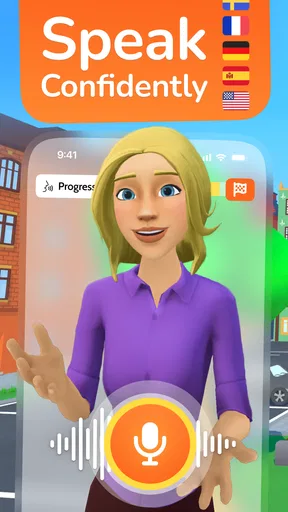
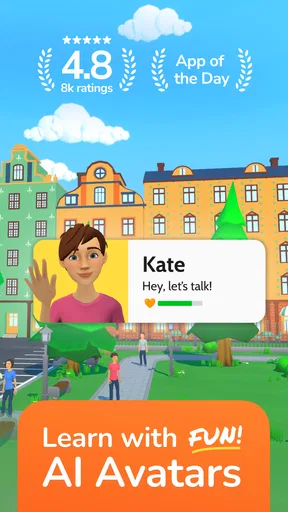
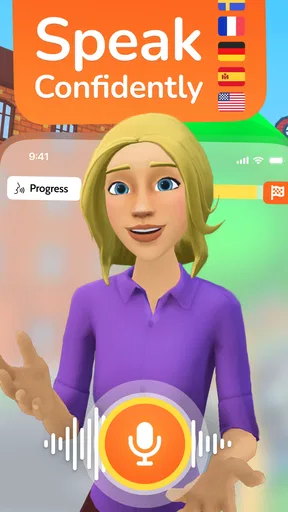
I’d treat LingoLooper: AI Language Game as a way to make speaking practice feel less intimidating, rather than a complete replacement for a course or a teacher. Its central idea—using AI avatars for conversational language practice—gives it a more active feel than memorizing isolated words. That can be useful when you know some vocabulary but hesitate to say anything aloud. The trade-off is that a lively format can make it tempting to confuse time spent playing with broad, balanced language study.
Where the conversational format earns its place
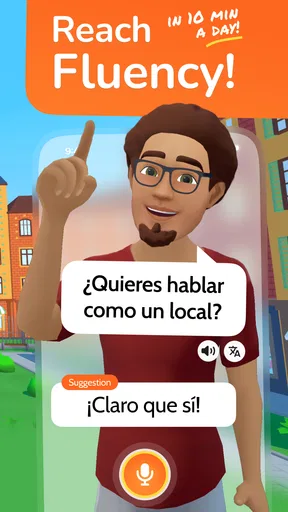
The clearest reason to try LingoLooper is the chance to practise producing language, not just recognizing it. In many educational games, the learner mostly taps answers or matches terms. A conversation with an AI avatar asks you to retrieve words and form a response, which is a more revealing test of what you can actually use. I’d see that as its strongest role: a low-pressure rehearsal space between lessons, not a shortcut to fluency.
That distinction matters if you’re learning Spanish for a trip, a family visit, or everyday exchanges at work. You can use a short practice session to get more comfortable responding instead of waiting for the perfect sentence to appear in a textbook. The useful habit is to notice where you stall: perhaps you understand the question but lack a verb, or you can answer simply but struggle to add a detail. Those are practical clues for what to review next.
A realistic routine could be a few minutes while waiting for a bus or settling in after lunch. I’d pick one small goal before opening the game—asking for something, describing a routine, or replying to a basic question—and then pay attention to which words I had to reach for. Afterward, jotting down a couple of gaps is more valuable than racing through another round without reflection. The app can make practice easier to start; a small follow-up habit helps turn it into learning.
How it differs from familiar study options
Compared with flashcard apps, LingoLooper’s conversational approach is better suited to practising recall in context, while cards are often more efficient for drilling a particular set of words. Compared with a structured course, it may feel more inviting when you want to speak without working through a formal lesson. But a course is usually the better choice if you need a carefully sequenced path through grammar, reading, listening, and writing. These tools solve different problems, and I wouldn’t ask one game to cover all of them.
It also isn’t the same as speaking with a patient human tutor. An AI avatar can offer a convenient way to practise without arranging a call, but human conversation brings natural interruptions, personal reactions, and the messy back-and-forth that is hard to reproduce in a practice environment. If your main goal is handling spontaneous conversation with people, I’d use the game as preparation and still seek real speaking opportunities when possible.
The store summary describes Spanish and more than twenty other languages, so there’s room to explore beyond the most commonly studied choices. I would still choose one target language at a time if I wanted steady progress. Switching among several can be fun for curiosity, but it fragments attention and makes it harder to build a dependable routine. The best use of that range may be sampling a language before deciding whether you want to commit to it.
Worth Reading Before You Choose

Flipboard Shows What News Apps Must Do Beyond the Feed

Switching to Android Auto Means Rethinking Your Driving Routine

Google Calendar Makes a Crowded Week Easier to Manage

Ludo King Makes the Most of the Minutes Between Plans

Baby Panda World Brings Quick Play to Modern Phones, but Its Game Library Feels Busy

ESPN’s Live Game View Makes Following Close Games Easier
Making practice useful rather than automatic
One non-obvious way to get more from conversational practice is to repeat the same kind of exchange with a slightly different answer, rather than treating every prompt as a one-off challenge. If you practise ordering something, for instance, try changing the item or adding a polite follow-up. That forces you to reuse a pattern instead of remembering one successful response. It is a simple way to turn a game session into deliberate practice without needing a long study plan.
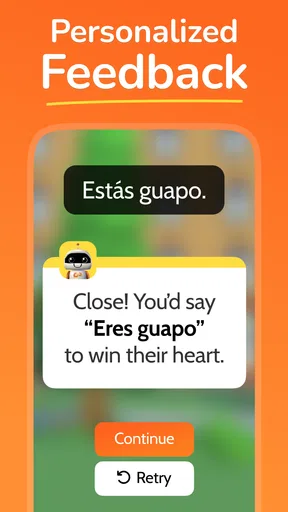
I’d also separate confidence from accuracy. Getting through a conversation without freezing is real progress, but it doesn’t necessarily mean every phrase was natural or correct. When something feels awkward, pause and look up the word or construction if the app’s flow lets you do so; then try using it again later. The point is not to chase a score at the expense of understanding. Treat feedback as a prompt to investigate, not as a final judgment of your ability.
For a beginner, short sessions may be less frustrating than trying to hold a complicated conversation before basic vocabulary feels familiar. For an intermediate learner, the appeal may be keeping speaking muscles active between more demanding study sessions. If you’re already comfortable discussing complex topics, you may find a game-oriented exchange too simple or too guided for your needs. In that case, a tutor, language exchange, or material made for advanced learners is likely to offer more useful resistance.
Who should think twice
I wouldn’t make this the only resource for someone preparing for an exam or needing accurate language for a high-stakes job. Those goals call for targeted instruction, careful correction, and practice matched to the actual tasks involved. Nor would I recommend relying on conversational play alone to learn spelling or improve extended writing. A spoken exchange and a written assignment demand different skills, so learners should choose another tool for the areas this format does not naturally exercise.
It’s also worth considering the cost before settling into a routine. The game is free to download, but it includes optional in-app purchases, with listed item prices ranging from $5.99 to $99.99. I’d explore the free experience first and decide whether its particular style helps me practise consistently before spending anything. That range makes it especially sensible to check what an optional purchase provides and whether it suits your own learning goal, rather than assuming a paid option is necessary.
For younger learners or families, the Everyone age rating is a helpful starting point, but I’d still judge whether the conversation format and any purchase prompts fit the person using it. The age label isn’t a substitute for deciding how much independence a child should have with in-app spending. For adult beginners, the more relevant question is whether they enjoy learning by trying responses and adjusting, rather than studying explanations first.
First Impressions: A Game-Changer
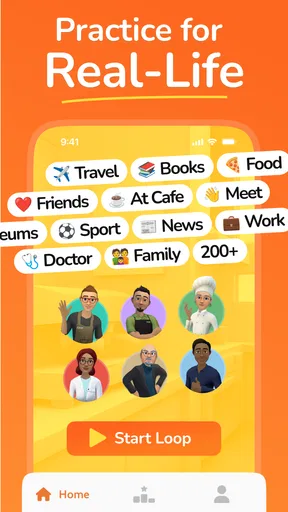
When I first downloaded LingoLooper: AI Language Game, I was immediately impressed by its vibrant interface. The app feels alive with its colorful graphics and intuitive design. You can tell that a lot of thought went into making it user-friendly. From the get-go, it doesn’t overwhelm you with complex menus or settings. Instead, it gently guides you into the learning process.
What’s really cool is how it uses AI to personalize your learning journey. The app adapts to your pace and style, which means it's like having a personal tutor in your pocket. It’s super engaging and keeps you coming back for more.
Diving Into the Gameplay
Now, let's talk about the gameplay itself. It’s structured around a series of challenges and puzzles that are both fun and educational. You start with basic vocabulary games and gradually move on to more complex sentence structures. The progression feels natural and rewarding.
One feature I absolutely loved is the listening exercises. You get to hear native speakers and then mimic their pronunciation. This not only helps with speaking skills but also boosts your confidence. The app even scores you based on accuracy, which turns learning into a friendly competition with yourself.
Features That Stand Out
Let’s dig a little deeper into some standout features. First up, the variety of languages available. Whether you’re interested in learning Spanish, French, Mandarin, or something more niche like Swahili, LingoLooper has you covered.
The app also includes a handy dictionary feature that lets you quickly look up words as you encounter them in the games. This instant feedback loop is incredibly helpful and ensures you’re always building on what you’ve learned.
Another feature I found really beneficial is the daily challenges. These are designed to test your knowledge and ensure you’re integrating what you’ve learned into long-term memory. It’s a great way to stay motivated and track your progress over time.
Community and Social Features
One aspect that sets LingoLooper: AI Language Game apart from other language apps is its community feature. You can connect with other learners, share tips, and even challenge each other to language duels. It’s a great way to stay engaged and make learning a social experience.
There are also leaderboards where you can see how you stack up against other players worldwide. If you’re competitive like me, this adds an extra layer of fun and motivation to keep improving.
Final Thoughts
After spending a few weeks with LingoLooper: AI Language Game, I can confidently say it’s one of the best language learning apps out there. It combines the fun of gaming with the practicality of language learning in a way that feels effortless. The use of AI to tailor the experience to each individual is a game-changer.
If you’re looking to pick up a new language and want to enjoy the process, I highly recommend giving it a try. It’s more than just an app; it’s a whole new way to learn.
So, what are you waiting for? Dive into the world of LingoLooper: AI Language Game and start your language adventure today!
A realistic place in a study routine
For me, the best way to fit this into a day is to treat it as a speaking warm-up, not as a full study session. Before a video call with Spanish-speaking relatives, for example, I might practise a few likely exchanges and then make a short list of phrases I want to use naturally. That gives the game a clear purpose. If the conversation is important, I’d still check unfamiliar wording elsewhere rather than assuming one practice round settles every nuance.
The same approach works for travel preparation: rehearse greetings, simple requests, and how to ask someone to repeat themselves, then pair that with listening to real speech and learning the written forms. One useful trade-off is that rehearsing familiar situations can reduce nerves, but it can also leave you less prepared for unexpected replies. I’d deliberately practise flexible responses—asking for clarification or saying that I don’t understand—rather than memorizing a single ideal answer.
What to expect before installing
LingoLooper is an educational game from Lumi Labs AB, released on February 9, 2024. It is free to download, has an Everyone age rating, and its current version is 0.18.3 for devices running Android 8.0 or later. It has a 4.7 average from around 5.4 thousand ratings, with over 100 thousand installs. Those figures suggest that many learners have tried it, but popularity cannot tell you whether its conversational style will suit your goals; that depends on how you like to practise.
A practical question is whether it can replace a language course. I wouldn’t count on it as a complete substitute: the strongest case for the game is active, approachable practice, while a course or teacher is a better fit when you need a planned curriculum and detailed explanations. Another common question is whether it makes sense for a complete beginner. It can be an inviting starting point if you’re comfortable experimenting, but someone who wants explicit grammar instruction may prefer to pair it with a beginner course from the outset.
People also ask whether it is useful for maintaining a language they already know. I think it can be, especially as a way to keep producing simple spoken responses when regular conversation is hard to arrange. The more advanced your level, however, the more important it becomes to supplement game prompts with natural media and unscripted conversation. And if you are wondering whether to pay, I’d first establish that you enjoy the free experience and inspect each optional purchase carefully; the listed purchase range is broad enough that the decision should be based on the specific item, not a general assumption that paying improves learning.
My recommendation
The audience I’d recommend this to is someone who has been putting off speaking practice because it feels awkward, or a learner who wants a playful way to rehearse between more structured lessons. It is less convincing as a one-stop solution for exam preparation, advanced conversation, or systematic writing and grammar study. That isn’t a failure; it is a reminder to choose a tool for the skill it can help you practise.
My overall view is positive but measured. The conversational game format gives language practice a useful sense of momentum, and the AI-avatar premise makes trying an answer feel less daunting than speaking to a stranger. I’d use it regularly in small, goal-focused sessions, while keeping a course, reference source, or real conversation in the mix for the areas a game cannot cover as well. If you want a friendly nudge to speak more, it is worth trying; if you need a complete curriculum, I’d look elsewhere or use it only as a supplement.
Pros
- Engaging AI-driven language challenges.
- Supports multiple languages for diversity.
- User-friendly interface with intuitive navigation.
- Regular updates with new content.
- Offline mode for learning on the go.
Cons
- Limited free version features.
- Occasional in-app ads can be distracting.
- Some languages lack advanced levels.
- Subscription required for premium content.
- Initial setup requires stable internet.
FAQs for LingoLooper: AI Language Game
What is the main objective of LingoLooper: AI Language Game?
LingoLooper: AI Language Game aims to enhance language learning through engaging and interactive gameplay. It uses AI-powered challenges to help users improve vocabulary, comprehension, and pronunciation in multiple languages. The game is designed to be both educational and fun, making language acquisition an enjoyable experience for players of all ages.
How does the AI technology in LingoLooper enhance language learning?
The AI technology in LingoLooper personalizes the learning experience by adapting to each user's proficiency level and progress. It provides real-time feedback and suggests tailored exercises to address individual weaknesses. This ensures a more efficient learning process, allowing users to focus on areas that need improvement while maintaining engagement through dynamic content.
Can I use LingoLooper: AI Language Game offline?
Yes, LingoLooper offers an offline mode that allows users to access certain features and lessons without an internet connection. However, to fully utilize the AI-driven tools and receive updates or new content, an internet connection is recommended. Offline mode is particularly useful for practicing on the go or in areas with limited connectivity.
Is LingoLooper suitable for beginners in language learning?
Absolutely, LingoLooper is designed to cater to all levels, including beginners. The app starts with basic vocabulary and simple phrases, gradually increasing in complexity as users progress. Beginners will find the user-friendly interface and intuitive instructions particularly helpful, providing a solid foundation for further language learning.
Are there any in-app purchases or subscription fees in LingoLooper?
LingoLooper offers a free version with basic features, but users can opt for in-app purchases or a subscription model to access premium content and advanced features. These enhancements include exclusive lessons, ad-free experience, and additional language options. Users can choose the plan that best fits their learning goals and budget.


